Last Updated on 01/10/2025 by 75385885
Guinness corporate governance – A Brand, A Family, A Governance Journey
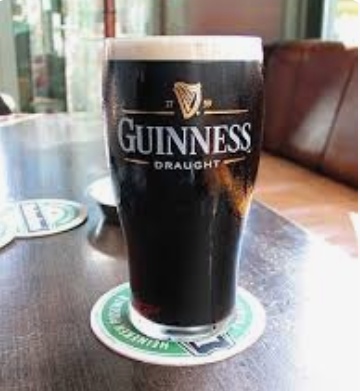
Few corporate names are as globally recognised as Guinness. The black pint with its creamy head has become a cultural icon, celebrated on St. Patrick’s Day and sold in more than 150 countries. Yet behind the beer lies a complex governance story: from the Guinness family’s patriarchal control in the 19th century, through scandal and corporate reinvention in the 20th century, to the highly structured governance of Diageo today.
This article traces that journey. It is not Guinness the Netflix dramatization (House of Guinness), but the real sequence of events that reveal how governance structures adapt when family dynasties meet public accountability, regulatory scrutiny, and global markets. The Guinness case provides enduring lessons on shareholder rights, board oversight, compliance, and the preservation of legacy.
Part I – From Family Stewardship to Public Accountability
The Family Era (1759–1886)
Arthur Guinness founded his brewery at St. James’s Gate in Dublin in 1759. For over a century, the brewery was essentially a family business. Governance in this era meant patriarchal stewardship: decisions were made within the Guinness bloodline, and accountability was personal. The family’s reputation – social standing, philanthropy, even religious affiliation – was as important as balance sheets.
This model mirrored many 19th-century enterprises, where trust and legacy substituted for independent boards or external oversight. The Guinness family took pride in being paternalistic employers, providing housing and social services for workers, long before modern ESG frameworks existed. But such governance rested on benevolence rather than checks and balances.
The IPO and Its Consequences (1886)
The listing of Guinness shares on the London Stock Exchange in 1886 marked a decisive break. Outside investors now demanded reliable accounts, disclosures, and equal treatment. The family remained influential, but the shift from “trust me” to “show me” governance had begun. Auditors, shareholder meetings, and formal boards became institutionalised.
From a governance perspective, this was a critical inflection point. The Guinness case shows how the move from private to public ownership imposes new obligations: transparency, accountability to non-family investors, and adherence to emerging corporate law norms.
Part II – The Guinness Scandal of the 1980s
The Distillers Takeover (1986)
Fast forward a century. By the 1980s, Guinness was a major PLC competing aggressively in global drinks markets. In 1986, Guinness launched a bid to acquire the Distillers Company (a Scottish whisky giant). To secure success, Guinness executives orchestrated a scheme: they arranged for investors to buy Guinness shares at inflated volumes, funded secretly by Guinness itself. This artificial demand pushed up the share price, making the takeover offer appear stronger.
Governance Failures
The scheme backfired spectacularly. Regulators investigated, and the Guinness scandal became one of Britain’s most notorious corporate frauds. Ernest Saunders, the CEO, was convicted of false accounting and conspiracy. Several directors and bankers were also implicated.
From a governance perspective, the scandal highlighted:
- Board oversight failure: directors did not challenge aggressive management tactics.
- Weak internal controls: there was no independent risk or compliance function to flag illegal practices.
- Ethical blindness: success in the takeover war was prioritised over fiduciary duty.
This episode remains a teaching case in governance courses worldwide, often compared to Enron (2001) or Wirecard (2020). It underscores how reputational capital, built over centuries, can be endangered by short-term ambition and poor governance.
Part III – Guinness Diageo merger: Rebirth as Diageo (1997)
The Merger with Grand Metropolitan
A decade after the scandal, Guinness reinvented itself. In 1997, Guinness plc merged with Grand Metropolitan plc, creating Diageo – today the world’s largest spirits company, with brands ranging from Johnnie Walker and Smirnoff to Tanqueray and Guinness.
This merger raised its own governance challenges:
- Cultural integration: Guinness had Irish roots and a heritage brand; GrandMet was cosmopolitan and marketing-driven.
- Board composition: the new entity required a balanced board with independence and global expertise.
- Investor scrutiny: markets were sceptical about whether synergies would materialise.
The merger illustrates governance at scale: how to align strategy, reassure stakeholders, and build robust oversight after a transformative transaction.
But ther could be more going on. Reuters brought this Diageo exploring potential spin-off or sale of Guinness, Bloomberg News reports.
Part IV – The Global Governance Model of Diageo
Today, Guinness is part of Diageo, a FTSE-listed multinational with a fully modern governance structure:
- Independent directors chair audit, remuneration, and nomination committees.
- Risk management systems are aligned with COSO frameworks and global compliance standards.
- ESG reporting is integrated into the annual report, consistent with CSRD-style sustainability disclosures.
Unlike the family-dominated past, governance is now dispersed and codified. The Guinness brand thrives under Diageo’s professional management, but it is no longer “run by Guinness for Guinness.”
Read the Diageo Corporate Governance briefing.
Part V – The Family’s Current Role
Guinness family business governance – The Guinness family retains a financial interest: reports suggest they still own shares in Diageo worth hundreds of millions of pounds. But they have no executive positions or direct control. Their influence is exercised through heritage institutions (e.g., the Iveagh Trust, a housing charity founded in 1890) and philanthropy, not corporate decision-making.
This evolution exemplifies a common governance trajectory for family businesses: from operational control → to strategic oversight → to passive legacy role. The challenge for families is preserving identity while ceding authority – a delicate governance balance.
Part VI – Governance Lessons from the Guinness Journey
The Guinness saga is more than a colourful story about beer and family drama. It is, at its core, a living case study of how governance either sustains or erodes a company. Five enduring lessons stand out, each carrying wider relevance for boardrooms and regulators alike.
1. Transparency is Non-Negotiable
When Guinness listed in 1886, it shifted from private family trust to public accountability. From that moment, the brewery could no longer run on reputation alone; it owed clear disclosures and equal treatment to a diverse shareholder base. The later 1986 scandal showed what happens when transparency fails: undisclosed share support operations destroyed investor confidence and drew regulatory wrath.
Compare this to Ahold in 2003 or Wirecard in 2020. In both cases, creative accounting and opaque disclosures left investors in the dark until it was too late. By contrast, Guinness managed to survive because it eventually embraced transparency: house-cleaning, new leadership, and full disclosure to regulators restored at least part of its credibility.
The governance lesson is sharp: disclosure is not compliance paperwork. It is the oxygen of capital markets. Without it, trust suffocates.
2. Culture Can Corrupt Governance
The Guinness scandal also proves that culture is not soft, but decisive. A boardroom mentality of “winning at all costs” allowed management to cut ethical corners. Non-executive directors failed to challenge the CEO, partly because the culture rewarded loyalty over independence.
This is the same cultural flaw that destroyed Enron: a fixation on short-term growth, backed by a culture of intimidation, silenced internal critics. Imtech in the Netherlands fell into a similar trap: growth and revenue targets mattered more than credible numbers.
Boards must recognise that governance is only as strong as culture allows. Independence on paper means little if directors are socially or psychologically captured by dominant executives.
3. Boards Must Be Vigilant in M&A
The 1997 Guinness–GrandMet merger that created Diageo is often remembered as a success, but only because governance structures were tightened. Balanced boards, independent committees, and robust communication with investors helped reassure markets that synergies would not be wishful thinking.
Contrast this with ABN AMRO and Fortis in 2007: a mega-deal driven by ambition, weak challenge from the board, and inadequate risk assessment. The result was collapse and government rescue.
The governance test in M&A is not valuation spreadsheets but oversight: do boards have the courage, independence, and information to challenge management’s enthusiasm? Deals that fail that test become value-destructive.
4. Family Legacy ≠ Family Control
Guinness today remains a family name, but not a family company. The heirs still hold wealth and status, yet they no longer steer strategy. This is a common trajectory for dynasties that list without safeguards.
Heineken illustrates the alternative: through Heineken Holding N.V., the family retains decisive voting control while outside shareholders provide capital. This dual structure ensures the family’s voice remains central to long-term decisions.
Governance here is about design: families must choose whether they want to stay in the driver’s seat. Structures, shareholder agreements, and succession planning make the difference between being a legacy investor (Guinness) or a legacy controller (Heineken).
5. Global Brands Require Global Governance
Finally, Guinness shows how governance must evolve with scale. What began as a family concern in Dublin is now part of Diageo, a FTSE-listed giant. Today’s governance is not about family councils or paternalistic welfare, but about independent audit committees, ESG disclosures, risk frameworks, and diversity requirements.
The expectations have shifted:
- Investors demand sustainability reporting aligned with frameworks like CSRD.
- Regulators require compliance with global anti-bribery, data protection, and tax rules.
- Stakeholders expect boards to be diverse in nationality, gender, and skill set.
Diageo’s governance model reflects this reality. It mirrors what global brands from Unilever to Nestlé have also had to embrace: governance not as a national pastime, but as a global operating system.
Putting It Together
Taken together, these lessons explain why Guinness succeeded where Wirecard and Enron failed. The brewery’s core business was real and valuable, which allowed governance reforms to restore confidence. Enron and Wirecard, by contrast, collapsed because governance failures revealed not just cultural rot, but the absence of a viable business.
They also show that families face a fork in the road: either institutionalise control like Heineken, or accept becoming passive shareholders like Guinness. Private equity resembles this second path: founders cash out, governance shifts to financial investors, and legacy influence fades unless explicitly protected.
In other words: the Guinness journey is not an anecdote, but a blueprint. It maps the governance choices companies make — about transparency, culture, oversight, family control, and global standards. Each choice has consequences, some measured in lost fortunes, others in lasting resilience.
Part VII – Comparisons and Wider Implications
- Enron and Wirecard: like Guinness in the 1980s, they collapsed under governance failures. The difference is that Guinness survived, restructured, and restored legitimacy.
The Guinness scandal of 1986 could easily have been fatal. Compare it to Enron (USA, 2001) or Wirecard (Germany, 2020). Both imploded because once fraud was uncovered, the entire business model proved hollow. Enron hid debt in off-balance sheet vehicles, destroying investor trust overnight; Wirecard fabricated revenue with fake Asian subsidiaries, leaving no real business when the deception was revealed.
Guinness, by contrast, still had a real, valuable product and a global brand. The fraud was in the financial engineering around the Distillers takeover, not in the brewery’s operations. That meant the company could clean house, replace its leadership, and rebuild trust. In governance terms: scandals that affect culture and leadership can be repaired; scandals that undermine the core business model are usually terminal.
- Heineken: in contrast, the Heineken family still retains strong influence in governance, illustrating an alternative model of enduring family stewardship.
The Guinness family lost its grip after the 1886 listing because voting rights and ownership were diluted. Heineken shows the alternative model. The Heineken family, through Heineken Holding N.V., controls just over 50% of the voting rights in Heineken N.V., even though its economic interest is lower. The holding structure means that ordinary shareholders provide capital, but the family keeps decisive influence on strategy, board appointments, and long-term direction.
This is entirely public information: the family controls the holding, which in turn owns a controlling stake in the listed entity. Governance-wise, it shows that families can remain powerful players on the stock market if they separate economic ownership from voting control. Where Guinness allowed its influence to be diluted, Heineken engineered a structure that still works after more than a century.
- Private equity exits: Guinness’s trajectory resembles many family businesses that ultimately merge or list, leaving heirs as shareholders rather than managers. In many ways, the Guinness trajectory resembles the private equity model. In PE-backed firms, families or founders often cash out control in return for capital, but remain as minority investors. Strategy and governance then shift to professional managers and investor representatives, whose main focus is value creation within a defined time horizon.
That dynamic was visible at Guinness after the IPO: once the family stepped back, external investors became the dominant voice. The difference is that in public markets the investor base is dispersed, while in PE it is concentrated. In both cases, though, the family risks losing cultural influence unless it negotiates safeguards. The collapse of V&D under private equity ownership in the Netherlands shows the danger: investors squeezed for returns, but the brand lost its anchor. Guinness avoided that fate only because Diageo could embed the brand into a broader portfolio, sustaining the business long-term.
The Combined Lesson
Put together, the comparisons sharpen the Guinness insight:
- Enron and Wirecard show that fraud plus hollow business = collapse.
- Guinness shows that fraud plus strong fundamentals = painful, but survivable.
- Heineken shows that families can stay in control if they design voting structures.
- Private equity shows the risks when financial logic trumps long-term stewardship.
For boards and families alike, the choice is stark: build governance that sustains both trust and control, or risk becoming a brand remembered more for its collapse than for its legacy.
Conclusion – A Pint of Governance Lessons
The Guinness brand is still poured around the world, but the governance behind it has transformed beyond recognition. From Arthur Guinness’s patriarchal brewery, through scandal and reinvention, to Diageo’s global compliance machine, the story encapsulates the evolution of corporate governance itself.
It is a reminder that reputation, like a pint, can be carefully crafted – but also quickly spilled. The Guinness case teaches boards, families, and regulators alike that stewardship requires more than heritage: it demands robust, adaptive, and transparent governance.
FAQ’s to the Guinness story
Did the Guinness scandal change UK corporate governance law?

Yes. The scandal in the 1980s strengthened calls for tougher takeover rules, more transparency in share dealings, and tighter director responsibilities under UK company law.
The Guinness brewery was founded in Dublin (1759) and remained Irish. But by the 20th century, Guinness plc was incorporated in London and listed on the London Stock Exchange.
In practice, that meant the company was subject to UK company law and UK takeover rules, not Irish law, at the time of the 1980s scandal.
How does Diageo report on sustainability today?

Diageo publishes annual ESG disclosures aligned with frameworks like GRI and TCFD, and is preparing for CSRD compliance in the EU. Guinness is often highlighted as a brand with water stewardship and responsible drinking initiatives.
Why did the Guinness family not retain control like the Heineken family?

Unlike Heineken, the Guinness family gradually diluted its holdings after the IPO and did not maintain a dual-class structure. This meant that by the late 20th century they were wealthy shareholders, not controlling owners.
What role does philanthropy play in the Guinness legacy?

The Iveagh Trust and other family endowments continue to influence Irish society, showing that families can redirect legacy from corporate governance to social governance.
Could the Guinness brand ever be spun out of Diageo?

Unlikely. Guinness is a core Diageo asset, integrated into its global supply chain and distribution. A spin-off would risk destroying synergies.
What can modern family businesses learn from Guinness?

To plan early for succession, governance structures, and shareholder agreements. Families that fail to professionalise governance risk losing not only control but also reputation.
Guinness corporate governance
Guinness corporate governance Guinness corporate governance Guinness corporate governance Guinness corporate governance Guinness corporate governance Guinness corporate governance Guinness corporate governance Guinness corporate governance Guinness corporate governance Guinness corporate governance Guinness corporate governance Guinness corporate governance Guinness corporate governance Guinness corporate governance Guinness corporate governance Guinness corporate governance Guinness corporate governance Guinness corporate governance Guinness corporate governance Guinness corporate governance Guinness corporate governance Guinness corporate governance Guinness corporate governance Guinness corporate governance Guinness corporate governance Guinness corporate governance Guinness corporate governance