Last update 28/12/2019
Retrospective or prospective application
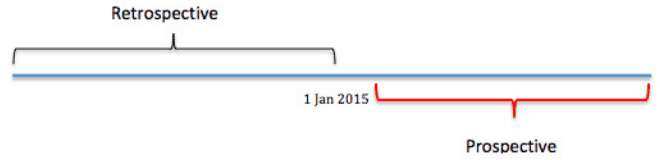
| Retrospective application – Applying a new accounting policy to transactions, other events, and conditions as if that policy had always been applied (change in accounting policy) (IAS 8 5).
OR Correcting the recognition, measurement and disclosure of amounts of elements of financial statements as if a prior period error had never occurred. |
|
Prospective application of a change in accounting policy and of recognising the effect of a change in an accounting estimate, respectively, are:
|
The concepts are used when the financial statements for multiple periods are being presented. With the retrospective application of accounting principles, the information in multi-period financial statements is more comparable from period to period. Retrospective or prospective application
| Changes in accounting policies | Correction of errors | Changes in estimates |
Change in accounting estimate – An adjustment of the carrying amount of an asset or a liability, or the amount of the periodic consumption of an asset, that results from the assessment of the present status of, and expected future benefits and obligations associated with, assets and liabilities. Changes in accounting estimates result from new information or new developments and, accordingly, are not correction of errors. Retrospective or prospective application
Financial statements are prepared based on an entity’s accounting policy application and estimation of certain events/transactions. Every company has a different accounting policies and different estimation processes as well, depend on the nature of business, size of business, strategy, internal and external environment. Retrospective or prospective application
Application of accounting policies and the estimation of certain events/transactions are made to make financial statements relevant and reliable for the user and economic condition on the reporting date. In applying accounting policies and estimation, an entity is required to apply consistently from period to period the application of the accounting policies and the estimation of certain events/transactions, so that the financial statements can be compared with previous periods. Retrospective or prospective application
Example: if in 20X1, X Company used LIFO method for inventory valuation, then in 20X2, they should use the same inventory valuation that they used for 20X1 in preparing the financial statement 20X2. Because if, X company change the accounting policies on inventory valuation (from FIFO to average), the financial statements for 20X1 and 20X2 can’t be compared.
Consistency in applying accounting policies and estimates doesn’t mean that we can’t change the policies and estimates. Accounting policies can be changed if only:
- The changes are required by IFRS, or Retrospective or prospective application


- The changes can produce financial statements that give more reliable and relevant information on impact of transaction, event, or other circumstances. Retrospective or prospective application
How it is Treated? Retrospective or prospective application
In applying changes in accounting policies and estimates, IAS divided into two treatments, retrospective or prospective. Retrospective means implementation new accounting policies for transaction, event, or other circumstances as if it had been implemented. In other words, retrospective will effect presentation of financial statements for previous periods. While prospective means implementation new accounting policies for transaction, event, or other circumstances after new accounting policies or estimation has been implemented.
When prospective or retrospective implementation should be applied? Retrospective or prospective application
- Retrospective implementation should be applied if the new accounting standards or policies are required by mandatory accounting standards and the changes can produce financial statements that give more reliable and relevant information on impact of transaction, event, or other circumstances.In the example above, if X company in 20X2 changes the inventory valuation method from FIFO to average, so that new accounting policies should be applied retrospectively. Then, the financial statements of X company for 20X1 should be restated. Retrospective or prospective applicationAnd Errors may arise from mistakes and oversights or misinterpretation of information. Material prior-period errors are adjusted retrospectively (that is, by restating comparative figures) unless this is impracticable. Retrospective or prospective application
- Prospective implementation should be applied if there is changes in accounting estimation. Retrospective or prospective application
See also: The IFRS Foundation

