Last Updated on 23/04/2026 by 75385885
Bosch governance automotive industry – Bosch is one of those companies that rarely dominates headlines, yet quietly underpins entire industries. It sits deep within the bloodstream of the global economy—embedded in cars, factories, homes, and increasingly in software-driven systems. With more than 400,000 employees and annual revenues exceeding €90 billion, it is not just a supplier; it is a systemic player in the industrial architecture of modern Europe .
And yet, Bosch today finds itself in a position that is as uncomfortable as it is revealing.
Because what made Bosch strong—discipline, precision, long-term thinking—is now precisely what makes adaptation difficult.
This is not a story about failure. It is a story about governance under pressure.
A governance architecture built for stability
To understand Bosch, one must first understand its ownership structure. Unlike most industrial giants, Bosch is not listed. Approximately 94% of its shares are held by the Robert Bosch Stiftung, a charitable foundation, while voting rights are largely concentrated in an industrial trust structure .
This creates a rare governance configuration:
- capital ownership is separated from control,
- control is separated from economic interest,
- and both are partially detached from short-term market pressure.
In governance terms, Bosch represents a form of stakeholder capitalism long before ESG and CSRD frameworks became mainstream. It is designed to:
- think in decades rather than quarters,
- reinvest rather than distribute,
- and balance economic performance with societal purpose.
This structure has undeniable strengths. It allows Bosch to invest heavily in research, to weather downturns, and to avoid the volatility that plagues publicly listed peers. It is, in many respects, a governance model that policymakers often advocate.
But governance structures do not operate in a vacuum. They interact with culture—and that is where the real story begins.
“Gründlichkeit” as a control environment
Bosch is not just governed differently—it thinks differently.
The German concept of Gründlichkeit—thoroughness—is not a stereotype here. It is an operational principle. Engineering decisions are validated extensively. Processes are designed to minimize error. Quality is non-negotiable.
From a governance perspective, this translates into a very strong control environment, in the sense used by COSO:
- decisions are structured,
- risks are analyzed rigorously,
- deviations are minimized.
In financial reporting terms, one could compare this to a bias toward reliability over relevance: better to be correct than fast.
For decades, this worked exceptionally well. Bosch became a global leader in combustion engine technologies, particularly in fuel injection and diesel systems. Its products were precise, efficient, and trusted. OEMs depended on Bosch not just as a supplier, but as a technological partner.
Success, however, has a side effect: it creates path dependency.
In many organizations, success leads to confidence. In industrial systems like Bosch, it leads to something deeper: institutional reinforcement.
Investments flow toward proven technologies. Talent is developed within established domains. Incentives are aligned with existing business models. Over time, this creates a self-reinforcing loop:
- the organization becomes better at what it already does,
- but less sensitive to what it does not yet do.
This is not a failure of governance. It is a consequence of governance functioning exactly as designed.
The implicit principle becomes:
Do not disrupt a system that delivers.
For Bosch, that system was the combustion engine ecosystem—arguably one of the most successful industrial systems in modern history.
The problem is not that Bosch failed to see change coming.
The problem is that the speed and nature of the change did not fit the governance model through which Bosch evaluates change.
A system shock: electrification and software
Over the past decade, the automotive industry has undergone a structural transformation. This is often described as a transition—but that understates the reality.
This is not a gradual shift. It is a redefinition of the product itself.
Cars are no longer primarily mechanical systems. They are becoming:
- software platforms,
- data-generating devices,
- components in broader mobility ecosystems.
Electrification eliminates large parts of the mechanical complexity that Bosch historically mastered. At the same time, software, AI, and connectivity introduce new capabilities—and new competitors.
From China, in particular, a new generation of EV manufacturers has emerged, combining speed, scale, and state-supported ambition. European incumbents, including Bosch’s core customers, are under pressure to respond .
For Bosch, this creates a dual challenge:
- its traditional competencies are partially devalued,
- its customers are themselves in transition—and under pressure.
In governance terms, this is a systemic risk. Not a risk within the company, but a risk to the system in which the company operates.
Read more on Bloomberg: Germany’s industry crisis deepens as Bosch cuts 13,000 workers.
From stability to tension
The consequences are now visible.
Bosch has announced significant restructuring measures, including the reduction of approximately 13,000 jobs in Germany, primarily within its mobility division . The company aims to reduce costs by around €2.5 billion annually in response to persistent market weakness and structural changes in demand .
These are not isolated decisions. They are signals.
They indicate that:
- the decline of legacy technologies (notably diesel) is accelerating,
- the growth of new technologies is not yet compensating,
- and the cost base reflects a world that is no longer fully there.
This is where governance becomes visible—not in policies, but in timing.
Because one of the defining characteristics of stable governance systems is this:
they tend to adjust later, but more forcefully.
Bosch did not rush into radical restructuring. It absorbed, analyzed, and adjusted gradually.
But when adjustment becomes unavoidable, it tends to be sharp and concentrated.
Capital allocation under pressure
A further layer of complexity emerges when looking at capital allocation.
Recent commentary suggests that Bosch is spending billions to restructure parts of its organization—effectively buying time and stability—while questions arise as to whether these resources might have been better deployed in accelerating innovation .
This is a classic governance dilemma:
- invest in the future,
- or stabilize the present.
In theory, the answer is both. In practice, trade-offs are unavoidable.
Within large, diversified organizations, these trade-offs are rarely neutral. Legacy divisions often retain influence. Historical success carries weight. Internal capital markets reflect not just strategy, but also organizational politics and identity.
Again, this is not unique to Bosch. But Bosch’s governance model—with its emphasis on continuity and internal alignment—can amplify these dynamics.
Read more on Bosch but then its continued invesments: Bosch starts up 2.5 MW hydrogen electrolyzer in Germany (PV Magazine).
The paradox becomes visible
At this point, the contours of the paradox are clear.
Bosch is:
- financially strong,
- technologically capable,
- strategically aware.
And yet:
- it is restructuring under pressure,
- adjusting its portfolio,
- and accelerating change that, in hindsight, might have started earlier.
This is not contradiction. It is the outcome of a governance model encountering a fundamentally different environment.
Because Bosch is not standing still. Far from it.
The real question is whether its responses are fast enough, focused enough, and culturally aligned with what the new industrial reality demands.
Diversification: strength or strategic diffusion?
One of Bosch’s defining characteristics is that it is not a pure automotive supplier. Its activities span:
At first glance, this looks like textbook risk management. And to a large extent, it is.
Diversification provides:
- multiple revenue streams,
- resilience across cycles,
- and internal funding capacity when one sector underperforms.
In governance terms, it acts as a portfolio hedge—a way to stabilize the organization when one pillar weakens.
And this is exactly what we see today.
While the mobility division is under pressure, Bosch is actively expanding in adjacent domains. A notable example is its push into energy systems, particularly heat pumps and building technology—markets benefiting from the broader energy transition .
This is not opportunistic. It is structurally aligned with macro trends:
- decarbonization,
- electrification beyond mobility,
- and regulatory pressure on energy efficiency.
However, diversification has a second, less discussed side.
It can also become a form of strategic dilution.
Because the more domains an organization operates in:
- the more complex capital allocation becomes,
- the harder it is to maintain strategic focus,
- and the greater the risk that transformation in the core business is partially postponed rather than fully confronted.
In other words:
diversification can buy time—but it does not replace transformation.
The technology pivot: from hardware excellence to software uncertainty
Perhaps the most profound shift Bosch faces is not electrification itself, but the transition from hardware to software.
Historically, Bosch excelled in:
- precision engineering,
- mechanical systems,
- and highly optimized production processes.
These capabilities are deeply embedded in its DNA.
But the future of mobility—and increasingly of industrial systems—lies in:
- software integration,
- artificial intelligence,
- data-driven functionality.
Bosch is investing in this transition. Developments in AI-driven autonomous systems illustrate a clear strategic intent to remain relevant in next-generation mobility .
Yet here, governance meets culture in a very direct way.
Software development requires:
- rapid iteration,
- tolerance for failure,
- shorter development cycles,
- and decentralized decision-making.
This is fundamentally different from the engineering-driven governance model Bosch has historically relied on.
Where traditional Bosch governance emphasizes:
- validation,
- control,
- and predictability,
software-driven environments require:
- experimentation,
- adaptability,
- and speed.
This creates a structural tension:
the stronger the existing control environment, the harder it is to adopt an agile one.
This is not a trivial adjustment. It is a transformation of the control philosophy itself.
Read more on Bosch: Bosch Presents Integrated Software and Hardware Strategy at CES 2026 (Maeil Business).
Restructuring: the cost of delayed adjustment
The announced job cuts—13,000 positions, primarily in Germany—are a visible manifestation of this transition .
They are also a signal of something deeper.
Restructuring in organizations like Bosch tends to follow a specific pattern:
- prolonged analysis and gradual adaptation,
- followed by concentrated, large-scale intervention when necessary.
This reflects a governance preference for:
- stability,
- social responsibility,
- and consensus.
In the German context, this is reinforced by:
- co-determination,
- strong labor representation,
- and regional embeddedness.
The result is a system that avoids abrupt change—but when change becomes unavoidable, it is larger in magnitude.
From a governance perspective, this raises a critical question:
Is it better to adjust early and incrementally, or later and more drastically?
There is no universal answer. But in fast-moving technological environments, delayed adjustment often increases the eventual cost—both financially and socially.
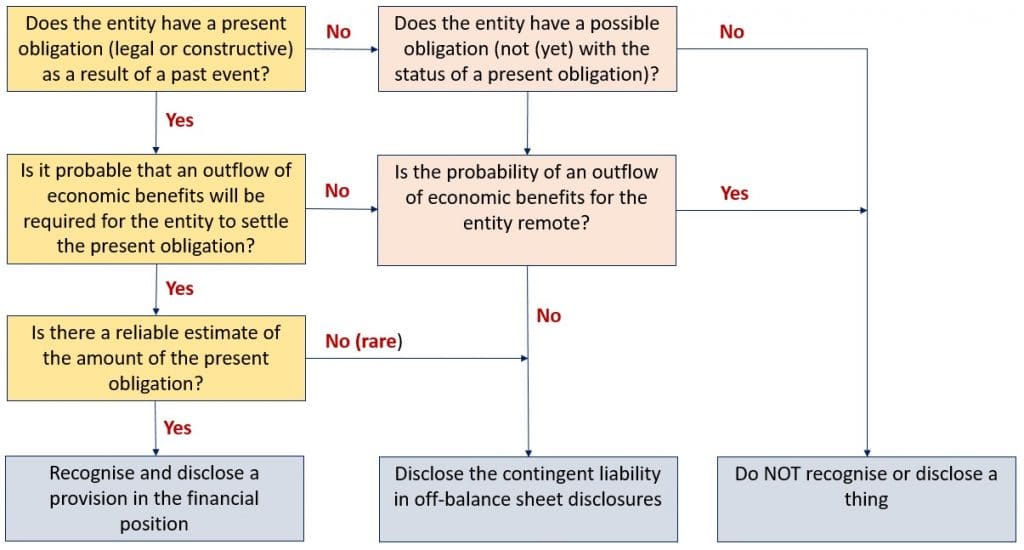
Read more in our blog on IFRS Reporting in: IAS 37 Provisions – Restructuring – What are the IFRS requirements?
The broader system: Bosch is not alone
One of the most important observations is that Bosch’s situation is not unique.
Across the German automotive ecosystem, similar patterns are visible:
- Volkswagen struggling with EV transition economics,
- Continental restructuring its supplier model,
- ZF navigating electrification and cost pressures.
These companies share key characteristics:
- strong engineering heritage,
- deep integration with the combustion engine ecosystem,
- governance models emphasizing stability and long-term planning.
This suggests that what we are observing is not a company-specific issue, but a system-level phenomenon.
The German industrial model—often praised for its resilience and quality—is now being tested in an environment defined by:
- rapid technological disruption,
- geopolitical fragmentation,
- and new competitors with fundamentally different operating models.
Bosch governance automotive industry German industrial governance, automotive suppliers governance, Bosch strategy transformation, electrification automotive sector, governance in industrial companies, German automotive crisis governance
Bosch governance automotive industry Bosch governance automotive industry Bosch governance automotive industry Bosch governance automotive industry Bosch governance automotive industry Bosch governance automotive industry Bosch governance automotive industry Bosch governance automotive industry Bosch governance automotive industry Bosch governance automotive industry Bosch governance automotive industry Bosch governance automotive industry Bosch governance automotive industry Bosch governance automotive industry Bosch governance automotive industry
The governance mismatch
At the heart of this lies a simple but powerful idea:
governance models are optimized for specific environments.
Bosch’s governance model was optimized for:
- incremental innovation,
- long product cycles,
- stable competitive dynamics.
The current environment, however, is characterized by:
- discontinuous innovation,
- short development cycles,
- and platform-based competition.
This creates a mismatch between governance and reality.
And mismatches do not immediately lead to failure. They lead to:
- delayed reactions,
- suboptimal capital allocation,
- and increasing pressure over time.
Also read our blog on: What the Tesla Case in Germany Reveals About the Changing Balance Between Labour and Capital.
What Bosch still does exceptionally well
Despite these challenges, it would be a mistake to frame Bosch as a company in decline.
On the contrary, several strengths remain highly relevant:
1. Financial robustness
The absence of shareholder pressure allows Bosch to absorb shocks and invest strategically.
2. Technological depth
Few companies possess Bosch’s breadth of engineering expertise across industries.
3. Portfolio resilience
Diversification provides stability and optionality.
4. Institutional continuity
Long-term thinking remains a valuable asset—if combined with adaptability.
These are not trivial advantages. In fact, they may ultimately enable Bosch to navigate the transition successfully.
But they are not sufficient on their own.
The real challenge: adapting governance without losing identity
The most difficult question Bosch faces is not strategic, but institutional:
How do you change the way you make decisions without losing what made you successful?
This is where many transformations fail.
If Bosch were to abandon its governance principles entirely, it would lose:
- its stability,
- its identity,
- and its long-term orientation.
If it does not adapt them sufficiently, it risks:
- losing relevance in key markets,
- falling behind faster-moving competitors,
- and being structurally outpaced.
The answer, therefore, is not binary.
It lies in evolution rather than replacement:
- integrating speed into stability,
- embedding experimentation within control,
- and aligning capital allocation with future value creation rather than past success.
From tension to insight
At this stage, the Bosch case reveals something broader.
It shows that governance is not just about:
- structures,
- policies,
- or compliance.
It is about fit:
- fit between organization and environment,
- fit between culture and strategy,
- fit between past success and future requirements.
And when that fit weakens, even the strongest organizations experience tension.
Because Bosch is not an isolated case. It is a mirror.
A mirror for boards, supervisory directors, audit committees, and executives who operate in environments where yesterday’s success can quietly become tomorrow’s constraint.
What Bosch did right — and why it still matters
Before turning to lessons, it is essential to remain balanced.
Bosch is not a story of governance failure. On the contrary, many of its core characteristics represent best-in-class governance principles.
First, there is long-term orientation. The foundation ownership model allows Bosch to invest without the distortions of quarterly earnings pressure. In an era where short-termism is often criticised, Bosch demonstrates what patient capital can look like in practice.
Second, Bosch has built deep technological capability. Its engineering excellence is not easily replicated. This is not superficial innovation—it is structural competence embedded across decades.
Third, there is portfolio resilience. By operating across multiple domains, Bosch has created buffers that many pure-play automotive suppliers simply do not have.
And finally, Bosch maintains a strong institutional identity. It knows what it stands for. In governance terms, this is the “control environment” at its strongest: values, norms, and behaviours are aligned and consistent.
These strengths explain why Bosch is under pressure—but not in crisis.
Where governance lagged — and why that matters
At the same time, the Bosch case shows that even strong governance systems can lag behind structural change.
The first area is timing of strategic adjustment. The shift toward electrification and software was visible for years. Yet large-scale structural adjustments—such as workforce reductions—are being implemented relatively late.
This is not negligence. It is the result of a governance model that:
- values certainty over speed,
- prefers validated decisions over speculative moves,
- and seeks alignment before action.
In stable environments, this is optimal. In disruptive environments, it creates delay.
The second area is capital allocation under legacy influence.
In large organizations, capital is not allocated in a vacuum. It flows through structures shaped by history:
- successful divisions retain influence,
- established technologies attract continued investment,
- internal narratives reinforce existing priorities.
Bosch is no exception. The question raised in external commentary—whether restructuring costs might have been better deployed in innovation—captures this tension .
From a governance perspective, this is a classic challenge:
how do you allocate capital toward a future that is not yet fully proven, while managing a present that is still economically significant?
The third area is cultural inertia.
Culture is often described as a “soft” factor. In reality, it is one of the most powerful governance mechanisms.
At Bosch, culture is built around:
- precision,
- reliability,
- and control.
These are strengths—but they can become constraints when:
- experimentation is required,
- failure becomes part of learning,
- and speed outweighs perfection.
Changing systems is difficult. Changing culture is significantly harder.
The systemic dimension: beyond Bosch
Perhaps the most important insight is that Bosch is not unique.
Across the German industrial landscape, similar patterns emerge:
- strong engineering traditions,
- long-term governance models,
- and current pressure from rapid technological change.
This suggests that what we are observing is a governance model under systemic stress.
The traditional German model—often characterised by:
- co-determination,
- stakeholder orientation,
- and industrial depth—
has delivered decades of success.
But it is now being tested by an environment that rewards:
- speed,
- platform thinking,
- and global scalability driven by software.
This is not about replacing one model with another. It is about recognising that:
governance models must evolve when the environment fundamentally changes.
Bosch governance automotive industry Bosch governance automotive industry Bosch governance automotive industry Bosch governance automotive industry Bosch governance automotive industry Bosch governance automotive industry Bosch governance automotive industry Bosch governance automotive industry Bosch governance automotive industry Bosch governance automotive industry Bosch governance automotive industry Bosch governance automotive industry Bosch governance automotive industry Bosch governance automotive industry Bosch governance automotive industry
Five governance lessons from Bosch
This is where the Bosch case becomes directly actionable.
1. Stability without adaptability becomes a risk
Long-term thinking is essential—but it is not sufficient.
A governance model that prioritises stability must also incorporate mechanisms for:
- early signal detection,
- rapid scenario analysis,
- and timely intervention.
Without these, stability turns into inertia.
2. A strong control environment can unintentionally slow innovation
Frameworks such as COSO emphasise:
- control,
- risk mitigation,
- and reliability.
These remain critical.
But in environments driven by innovation, governance must also enable:
- controlled experimentation,
- iterative development,
- and acceptance of uncertainty.
The challenge is not to weaken control—but to balance control with adaptability.
3. Diversification buys time—but does not replace transformation
Bosch’s diversified portfolio provides resilience. It allows the company to absorb shocks and invest across domains.
But diversification is not a substitute for addressing structural change in the core business.
Boards must therefore distinguish between:
- risk mitigation,
- and strategic transformation.
They are not the same.
4. Culture is the most powerful—and least visible—governance mechanism
Policies can be changed relatively quickly. Systems can be redesigned.
Culture cannot.
At Bosch, culture has been a source of strength. But it also shapes:
- how risks are perceived,
- how decisions are made,
- and how quickly change is accepted.
For boards and supervisory bodies, this implies:
governance oversight must include cultural diagnostics—not just financial and operational metrics.
5. Governance must evolve with the business model
Perhaps the most fundamental lesson is this:
governance is not static.
A governance model designed for:

- predictable, linear industries
will not automatically function in:
- dynamic, non-linear environments.
For Bosch, the transition from:
- hardware-driven engineering
to:
- software-driven ecosystems
requires a corresponding evolution in:
- decision-making processes,
- risk tolerance,
- and organizational structure.
The forward-looking question
The natural question is whether Bosch can successfully navigate this transition.
There are reasons for cautious optimism:
- financial strength,
- technological capability,
- and a willingness to invest in new domains such as AI and energy systems.
But success will not depend solely on strategy.
It will depend on whether Bosch can:
- accelerate decision-making without losing discipline,
- embrace experimentation without undermining quality,
- and reallocate capital decisively toward future value creation.
Bosch governance automotive industry Bosch governance automotive industry Bosch governance automotive industry Bosch governance automotive industry Bosch governance automotive industry Bosch governance automotive industry Bosch governance automotive industry Bosch governance automotive industry Bosch governance automotive industry Bosch governance automotive industry Bosch governance automotive industry Bosch governance automotive industry Bosch governance automotive industry Bosch governance automotive industry Bosch governance automotive industry
The real conclusion
It is tempting to frame the Bosch case in binary terms:
- success or failure,
- strength or weakness.
That would be a mistake.
Bosch is neither failing nor fully adapted.
It is in transition.
And that transition reveals something essential about governance:
Good governance is not about being right.
It is about remaining fit for purpose.
Bosch has been exceptionally well governed for the world it operated in.
The question now is whether that governance can evolve fast enough for the world that has emerged.
Final reflection
For boards, supervisory directors, and governance professionals, the Bosch case offers a powerful, and slightly uncomfortable, insight:
The characteristics you are most proud of as an organization
may also be the ones that limit you when the environment changes.
Precision can slow speed.
Stability can delay action.
Success can obscure urgency.
And governance—when it works well—can make all of this harder to see.
That is the paradox.
And that is why Bosch matters.
FAQ’s – German automotive crisis governance
1. Why is Bosch’s governance structure considered unique?

Bosch’s governance structure is highly distinctive because it combines foundation ownership with industrial control mechanisms. Approximately 94% of the economic ownership is held by the Robert Bosch Stiftung, while voting rights are concentrated in a separate industrial trust. This separation between economic interest and control creates a governance model that is fundamentally different from both publicly listed companies and private equity-backed firms.
From a governance perspective, this model enables a long-term orientation. Decisions are less influenced by short-term earnings pressure and more aligned with sustainability, technological investment, and societal impact. This resembles what is now often described under ESG or stakeholder governance frameworks, but Bosch has operated this way for decades.
However, this structure also reduces external pressure. Capital markets, activist investors, and takeover threats—often drivers of strategic urgency—are largely absent. As a result, strategic adjustments may be more internally driven and therefore slower. This duality—stability versus responsiveness—is at the heart of the Bosch governance paradox.
2. How does electrification affect Bosch’s business model?

Electrification fundamentally alters the economic and technological foundations of Bosch’s core business. Traditionally, Bosch has been a leader in combustion engine components, such as fuel injection systems and diesel technology. These systems are complex, high-margin, and engineering-intensive.
Electric vehicles, however, significantly reduce mechanical complexity. Many of the components that Bosch historically supplied either disappear or become less critical. At the same time, value shifts toward batteries, software, and system integration—areas where competition is structurally different.
From a governance perspective, this creates a classic transformation dilemma. Existing business units remain economically relevant in the short term, but their long-term prospects decline. This makes capital allocation decisions more complex: should resources support existing cash flows or accelerate investment in emerging technologies?
Electrification is therefore not just a technological shift. It is a governance challenge that forces boards to reassess strategic priorities, risk tolerance, and investment horizons.
3. Why is Bosch restructuring despite its strong market position?

Bosch’s restructuring, including the planned reduction of approximately 13,000 jobs, reflects structural rather than cyclical pressures. The global automotive market is undergoing a transformation that affects demand, cost structures, and competitive dynamics simultaneously.
The decline in demand for combustion engine components, combined with slower-than-expected growth in electric vehicles, creates a mismatch between existing capacity and future needs. Additionally, geopolitical uncertainty and trade barriers add further pressure to cost structures.
From a governance standpoint, restructuring is often the result of delayed adjustment rather than immediate reaction. Bosch’s governance model emphasizes stability, thorough analysis, and consensus. This tends to delay large-scale interventions. However, once action becomes unavoidable, it is typically more significant in scale.
This pattern illustrates a key governance principle: organizations that prioritize stability often adjust later—but more decisively. The challenge is to balance this stability with earlier, more incremental adaptation.
4. What role does company culture play in Bosch’s governance?

Culture is one of the most influential yet least visible components of governance. At Bosch, culture is deeply rooted in engineering excellence, precision, and reliability. These values have driven decades of success and are embedded in decision-making processes, performance evaluation, and organizational behaviour.
In governance terms, this aligns with the “control environment” concept within frameworks such as COSO. A strong control environment ensures consistency, reduces operational risk, and supports high-quality outcomes.
However, culture can also create constraints. In environments that require rapid innovation—such as software development or AI—success depends on experimentation, speed, and a tolerance for failure. These characteristics may conflict with a culture focused on perfection and risk minimization.
As a result, Bosch faces a cultural governance challenge: how to preserve its strengths while adapting to new requirements. This involves not only structural changes but also shifts in mindset, incentives, and leadership behaviour.
5. Is Bosch’s situation unique within the German automotive industry?

Bosch’s situation is not unique; it reflects broader structural challenges within the German automotive ecosystem. Companies such as Volkswagen, Continental, and ZF face similar pressures related to electrification, digitalization, and global competition.
These companies share common characteristics:
– strong engineering traditions,
– long-term governance models,
– and deep integration within the combustion engine value chain.
The transition toward electric and software-driven mobility disrupts these foundations. New competitors—particularly from China—operate with different governance models, often characterized by faster decision-making and stronger state support.
From a governance perspective, this suggests a systemic issue rather than a company-specific problem. The traditional German model, which has been highly successful in stable environments, is now being tested in a context that rewards speed and adaptability.
Understanding Bosch therefore provides insight into the broader transformation of European industrial governance.
6. What are the key governance lessons from the Bosch case?

The Bosch case offers several important governance lessons for boards and executives.
First, long-term orientation must be complemented by adaptability. Stability alone is not sufficient in rapidly changing environments.
Second, a strong control environment should not inhibit innovation. Governance frameworks must allow for controlled experimentation and faster decision-making.
Third, diversification can provide resilience but does not replace the need for transformation in core activities. Strategic focus remains essential.
Fourth, culture plays a central role in governance effectiveness. It shapes how organizations perceive risk, respond to change, and allocate resources.
Finally, governance models must evolve with the business context. Structures that work well in predictable environments may become less effective when disruption accelerates.
Together, these lessons highlight that governance is not static. It must continuously adapt to remain aligned with the organization’s strategic and operational reality.
