Last update 06/01/2020
IFRS 16 Leases introduced the term ‘Assets of low value’. IFRS 16 does not provide much guidance to assess what ‘low value’ means. There is no definition. The value referred to as ‘low value’ is the value of the asset when it was new, regardless of the age of the asset at inception of the lease.
The Basis for Conclusions of IFRS 16 provided the following guidance: Assets of low value
‘The IASB intended the exemption to apply to leases for which the underlying asset, when new, is of low-value (such as leases of tables and personal computers, small items of office furniture and telephones). At the time of reaching decisions about the exemption in 2015, the IASB had in mind leases of underlying assets with a value, when new, in the order of magnitude of US$5,000 or less.’
In addition, IASB says: ‘the outcome of the assessment of whether an underlying asset is of low-value should not be affected by the size, nature, or circumstances of the lessee – ie the exemption is based on the value, when new, of the asset being leased; it is not based on the size or nature of the entity that leases the asset.’
Context
In general, assets of low value are fully depreciated in the year of the purchase or in the period of acquisition.
By contrast, low-value pooling is a method of depreciating plant items at a higher rate to maximise deductions (create corporation income tax credits). In some countries, the following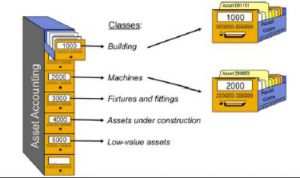
 categories of assets can be allocated into a low-value pool to increase the owner’s cash return:
- Low-cost assets: A low-cost asset is a depreciable asset that has an opening value of less than $1,000 in the year of acquisition.
- Low-value assets: A low-value asset is a depreciable asset that has a written down value of less than $1,000. That is, the value of the asset is greater than $1,000 in the year of acquisition. However, the remaining value after previous years’ depreciation is less than $1,000. Assets meeting this classification are placed in an itemised, low-value pool. An example could include a hot water system valued at $1,100. In the second financial year after installation, the asset would have depreciated to a written down value less than $1,000, which would make it eligible to be placed in the low-value pool.
Example
A lessee assesses whether an underlying asset is of low-value for each separate lease component. A lessee may apply the exemption only if both:
• The lessee can benefit from use of the assets on its own, or together with, other resources that are readily available to the lessee
And Assets of low value
• The underlying asset is not dependent on, or highly interrelated with, other assets
A supplier installs a security system in a large multi-storey department store. The security system comprises many modules which together function as an integrated system covering different sections of the department store. An individual module, when new, would cost about US$3,000. Each module is connected with the centralised computer system as well as other modules where appropriate. Assume the supplier appropriately concludes the arrangement contains a lease.
Is a single module of the security system considered to be of low-value?
A single module is highly interrelated with the other modules of the integrated security system. Accordingly, a single module does not qualify as a separate lease component for purposes of assessing whether the arrangement qualifies as a lease of low-value assets.
See also: The IFRS Foundation

