Dutch polder model governance: a uniquely Dutch invention
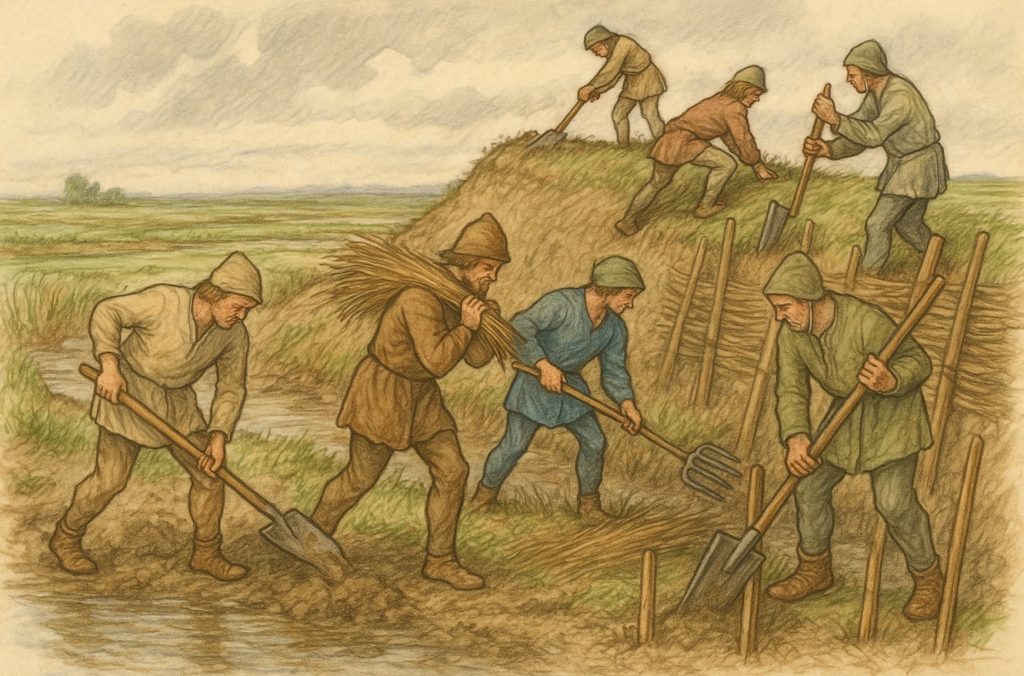
The Dutch polder model is often described as a typically Dutch form of governance based on negotiation, compromise, and consensus. Its origins are deeply historical: in a country largely reclaimed from the sea, survival literally depended on cooperation. Building and maintaining dikes, draining land, and preventing floods required collective action. This sense of “work together or drown together” shaped not only Dutch water management but also its political culture.
In the late 20th century, the polder model became famous worldwide. The Wassenaar Agreement of 1982, in which trade unions accepted wage restraint in exchange for job creation and working-time reductions, was hailed internationally as a model for stability. Newspapers such as The Economist and the Financial Times praised the Dutch consensus approach as a miracle of economic recovery.
But more than forty years later, the picture looks different. The polder model has not disappeared, but it has changed from an admired strength into a contested paradox. Once a symbol of joint problem-solving, it increasingly stands for stalemate, inertia, and a paper reality disconnected from real outcomes.
The essence of poldering
At its core, the polder model is about tripartite decision-making: employers’ organizations, trade unions, and the government negotiating to reach agreements that balance competing interests.
- Institutions: the Social and Economic Council (SER), national wage negotiations, corporatist councils.
- Method: long discussions, compromises, and carefully balanced outcomes.
- Goal: to maintain stability, social peace, and shared prosperity.
This model contrasts with confrontational systems in other countries, such as strikes in France or adversarial politics in the United States. Instead of polarization, the Dutch aimed for consensus.
Read about a special situational paper from the Leiden University – The Dutch Polder Model in science and research.
From cooperation to stalemate
In practice, the model worked remarkably well in the 1980s and 1990s. It allowed the Netherlands to reduce unemployment, restore competitiveness, and grow economically. But today, the same structures often lead to paralysis.
- Climate and energy: endless negotiations about burden-sharing delay implementation of urgent measures.
- Housing crisis: everyone agrees more homes are needed, but planning rules, environmental objections, and stakeholder conflicts block actual construction.
- Nitrogen policy: years of commissions, dialogues, and “round tables,” yet little progress while farmers, builders, and environmental groups clash.
Consensus has shifted from being a solution to being an excuse for inaction. The result is frustration: everything looks well organized on paper, but citizens and businesses feel the absence of real progress.
Poldering then and now
To understand today’s stalemate, we must compare the polder model’s past success with its present challenges.
Then: the early 1980s
The Netherlands faced a hard economic crisis:
- Unemployment above 10%.
- Inflation and interest rates in double digits.
- Thousands of bankruptcies.
- Falling productivity and loss of export markets.
- Household purchasing power under severe pressure.
The Wassenaar Agreement (1982), a consensus decision-making agreement, offered a clear trade-off: unions accepted wage restraint, employers promised job creation, and the government supported with tax incentives. Urgency was shared, the “deal” was clear, and all parties benefited.
Now: the 2020s
The problems are different but equally severe:
- Housing: waiting times for social housing of 7–10 years, home prices above 8× average salaries.
- Healthcare: costs nearing 15% of GDP, chronic staff shortages, and waiting lists of months or even years.
- Climate change: flooding risks in the low-lying west, delays in energy transition due to grid congestion.
- Nitrogen crisis: halted construction projects and existential pressure on farmers.
- Public administration: scandals such as the child benefits affair illustrate how rules suffocate citizens instead of serving them.
The similarity is striking: both then and now, the problems are hard, real, and urgent. But the difference lies in the response: where the 1980s produced decisive action, today’s polder model produces endless discussions without resolution.
One of the triggers, and certainly not the only one, as the is above shows, is ‘Lessons from uncertain times – Sailing in the Fog‘.
Inertia in healthcare and government
The polder model’s shortcomings are most visible in the healthcare sector and public administration.
- Healthcare: doctors and nurses spend hours on registrations and compliance forms, while patients wait longer for treatment. Resources are consumed by bureaucracy rather than care.
- Public sector: citizens face endless procedures for permits, subsidies, and benefits. Systems are optimized for rules, not outcomes. The result is a “paper reality”: everything checks out in reports, but dissatisfaction is widespread.
This illustrates a deeper governance dilemma: rules and consultations have become goals in themselves, rather than means to create value for people.
Companies and the illusion of soft controls
The same pattern is visible in the private sector. Companies have embraced soft controls – values, integrity, culture – and ESG reporting. Yet in many cases, these instruments produce extensive paperwork without real behavioral impact.
- Compliance checklists dominate board discussions.
- Integrity training is reduced to box-ticking exercises.
- ESG reports are polished, but their connection to genuine impact is thin.
Here too, governance risks becoming a “paper fortress” – formally impressive, but practically fragile.
Read more on this subject in our blog Culture Ethics and ESG: The New Frontiers of Governance.
The farmers’ protests: a stress test for consensus
The recent farmers’ protests provide a clear example of the polder model’s limits. Despite years of dialogue and consultation tables, the stalemate persisted. Tractors blocked highways and government buildings, intimidation became a tool of influence.
The lesson: the polder model only works when all parties accept the rules of compromise. Once one party rejects those rules, the model collapses into confrontation.
The governance dilemma
The core governance problem is simple: the polder model assumes that actors are willing to compromise. When this cultural foundation erodes, the structure fails.
- Checks and balances freeze when stakeholders refuse responsibility.
- Transparency becomes an alibi for delay.
- Accountability evaporates: everyone blames others for lack of progress.
- Compliance overtakes purpose: the system works on paper, not in practice.
The international mirror
Although the polder model is uniquely Dutch, the problem is universal. Many democracies suffer from institutional inertia.
- The EU often struggles with unanimity requirements.
- The US Congress faces repeated budget stalemates.
- German coalition governments are known for slow compromises.
The polder model thus highlights a global question: how can consensus systems remain effective in times of urgency?
From model to paradox
The polder model has shifted from being an admired model to a painful paradox:
- Without poldering: conflict escalates.
- With poldering: decisions stall.
- With only rules: reality is reduced to paper, disconnected from lived experience.
Citizens feel the outcome directly: lack of affordable housing, overloaded healthcare, rising energy bills, and stalled infrastructure projects.
The way forward
Governance renewal requires both structural reforms and cultural change.
- Set limits on consultation – define timelines and decision points.
- Make interests transparent – show clearly who gains and who loses.
- Strengthen institutions – give parliament, courts, and regulators power to act when talks collapse.
- Allow conflict within rules – sharp debates are acceptable, intimidation is not.
- Shift from compliance to impact – evaluate rules by whether they improve outcomes for people.
- Re-anchor values – responsibility, fairness, and cooperation must be lived, not just written.
Dutch polder model governance: reform or decline
The Dutch polder model is not dead, but it is exhausted. It can regain value, but only if the Netherlands recognizes that consultation and rules are not ends in themselves. Governance must once again be about real decisions and real improvements.
The lesson is clear: cooperation made the Netherlands resilient in the past, but only decisive governance will make it resilient in the future.
Dutch polder model governance
Dutch polder model governance Dutch polder model governance Dutch polder model governance Dutch polder model governance Dutch polder model governance Dutch polder model governance Dutch polder model governance Dutch polder model governance Dutch polder model governance Dutch polder model governance Dutch polder model governance Dutch polder model governance Dutch polder model governance Dutch polder model governance Dutch polder model governance
FAQs about the Dutch polder model
What exactly is the Dutch polder model?
The polder model is a system of consensus-based decision-making in which employers, trade unions, and the government negotiate to reach joint agreements.
It reflects the Dutch tradition of cooperation in water management and has been applied to labor relations, economic policy, and social issues.
This was the start of the Dutch consensus model.
Why did the polder model succeed in the 1980s?
Because the problems were severe and urgent: mass unemployment, high inflation, and loss of competitiveness.
The Wassenaar Agreement created a clear trade-off — wage restraint for job creation — and all parties benefited. Shared urgency and tangible results made consensus effective.
This was one of the latest trade-off from the Dutch tripartite system.
What is the main weakness of the polder model today?
Its tendency toward paralysis. Endless discussions and negotiations can prevent timely decisions.
Urgent issues such as housing, climate policy, and healthcare remain unresolved while stakeholders defend their own interests.
There do not seem to be clear possibilities to return to a Dutch style corporatism.
How does inertia manifest in healthcare and government?
Through excessive focus on rules and compliance. Healthcare professionals spend more time on reporting than on patients, and citizens face endless bureaucratic hurdles for benefits and permits.
Systems look perfect on paper, but real-life outcomes are disappointing.
Consensus-driven decision making has created a monster.
What can companies learn from the polder model’s problems?
That governance must not become a paperwork exercise. Soft controls and ESG frameworks are valuable only if they influence real behavior.
Companies should avoid box-ticking and ensure that governance structures connect directly to culture and performance.
Culture is often called the “soft” side of governance, but it may be the hardest element to master. Formal structures can dictate reporting lines, but culture dictates behaviour when no one is watching.
How can the polder model be renewed?
By limiting consultation to clear timelines, making interests transparent, empowering institutions to act, and focusing rules on impact rather than form.
Most importantly, values such as responsibility and cooperation must be practiced, not just documented.